
Will this help your nonfiction writing?
Using headings in nonfiction writing
Using headings in your nonfiction writing helps both the writing and the reading processes.
“Cliché” and “Stereotype”
Always something to learn about how the meaning of words has changed over time.
And: another thing.
Using ampersands? 'No way! I'll have to disagree with you there Paul.' But...
Ten things I’ve learned from my copyeditor
One writer’s experience with her copy editor highlights why your editor is your collaborator to make your writing clear, engaging and sharp.

Despite being the single highest cost of self-publishing so far, the copyedit will be the one expense I will never regret.
That would have been the list if this article was entitled “A single most important thing I’ve learned”. But it’s not, so there are ten more below. Which I guess makes it eleven…never mind! Anyway, after getting eight quotes and four samples from Australian and American editors, I chose Lu Sexton of A Story to Tell to copyedit Shizzle, Inc and I’m blown away with the results. To be honest, I had a lot of reservations about paying for editing. After all I’ve already had a structural edit; I’ve revised the draft no less than a hundred times myself; I speaka English real good. Handing over cash for a promise of making your draft better is scary, even if that promise comes with a professional reputation and an exceptional…
View original post 458 more words
The true tale of Elizabeth Frensington-Smythe
Good copywriters and editors look at both the big picture and the tiny details. And doesn't it show! Again, thanks to the talented Paul Hassing for this post.
Notes on DL brochures
Editing can be more than 'fixing' words. An experienced editor has a wealth of knowledge that can sharpen your writing in quite unexpected ways.
What is the Value of an Editor?
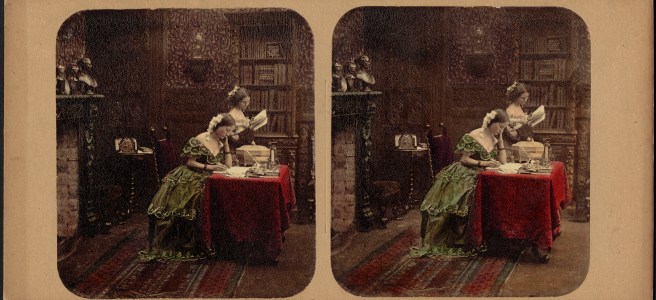
Editors add real value to your writing. Spending time and money to hire a professional editor pays in unexpected ways.
Another quick tutorial on apostrophes…
So beautifully explained by Australian author, Amanda Curtin, this tutorial will help you on your quest for clear, sharp writing.

 This especially quick tutorial is to clarify a single apostrophe usage that often confuses writers.
In manuscripts—and even in print—I frequently see the following:
Let’s go to the Molloy’s house.
Grammatically, this means:
Let’s go to the house of the Molloy.
Now, perhaps there is a big burly guy out there who is referred to as ‘the Molloy’, as in ‘Give that burrito to the Molloy before he chews someone’s arm.’ In that case, the above would be correct. But what the writer usually means is:
Let’s go to the Molloys’ house.
meaning:
Let’s go to the house of the Molloys. [a couple, or a family, or the three banjo-playing Molloy sisters]
If, on the other hand, the writer is referring to a particular Molloy:
Let’s go to the house of Molloy. [e.g. Joe Molloy]
then it would be:
Let’s go to Molloy’s house. [singular Molloy; no definite article]
Again…
View original post 14 more words
Tips for clear, engaging, sharp writing.
I prefer 'show and tell' rather than giving wordy explanations. Enjoy these examples (with very brief comments) of simple ways you can sharpen your writing - and that will please your readers.
 Word-nerdy blog